Purpose-driven research for disease burden reduction.
TOZARD is non-political, gender sensitive, non-religious, non-governmental and non-profit organisation, with a focus on using available science to empower people suffering from or exposed to targeted diseases, most of which are poverty driven
What we are
TOZARD has a biological science research laboratory used to generate innovative solutions that can be co-opted with existing knowledge and disseminated during outreach programmes for the improvement of live in dificult-to-reach communities.
Its scientific approach is evidence-based: knowledge is grounded in accumulated empirical evidence rather than opinion, feeling or intuition.
Building capacity from the laboratory to the rural communities.
Rural communities
Enable remote hard-to-reach rural communities to reap the benefits of biomedical science research and education, while strengthening their capacity to adopt innovative TOZ disease-control strategies.
Students
Donate to intelligent young biological science students from weak socio-economic or resource-poor backgrounds through education and hands-on research opportunities.
Knowledge transfer
Take state-of-the-art knowledge on TOZ diseases to endemic communities through knowledge dissemination systems, training and field demonstrations.
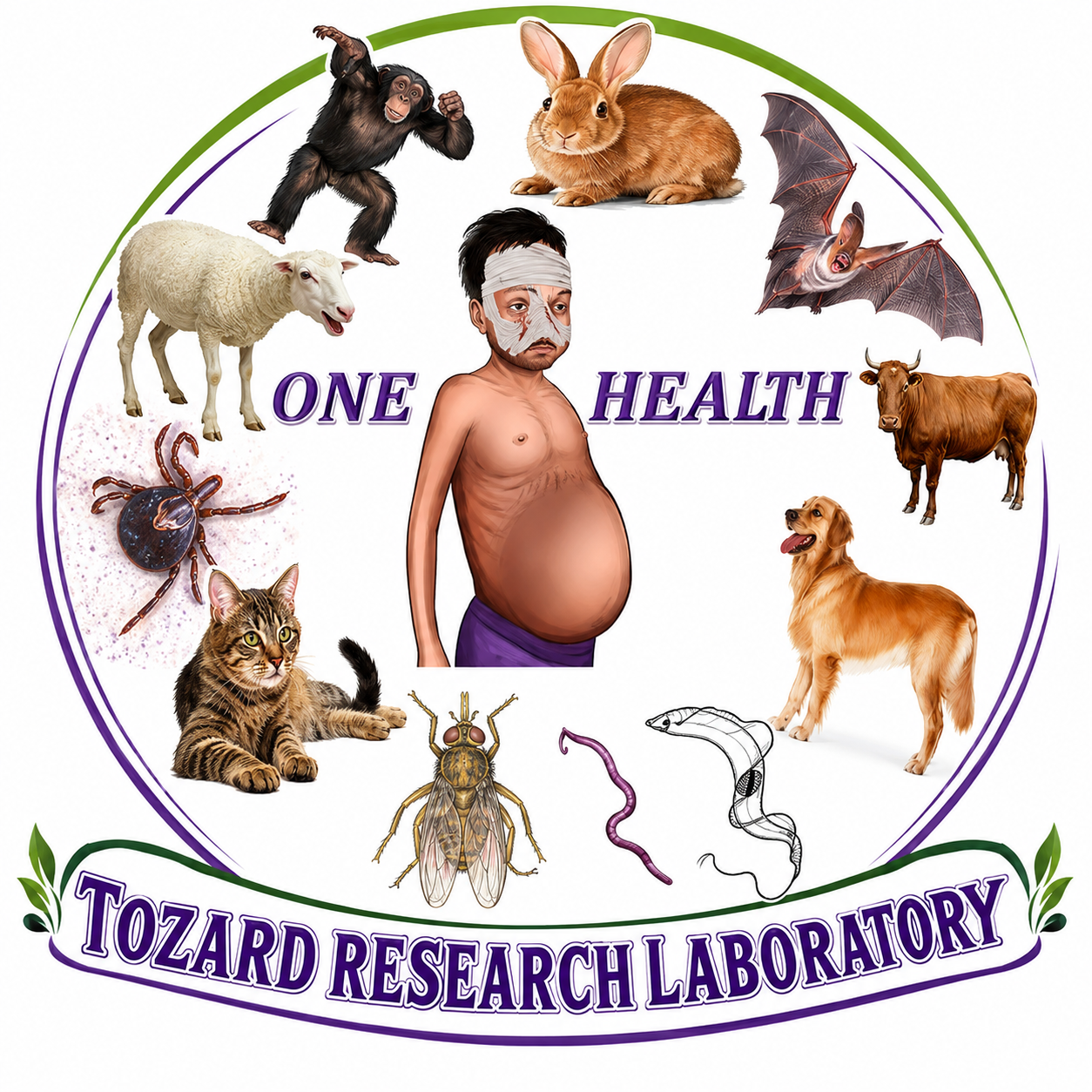
One Health
Use an interdisciplinary innovation platform connecting disease ecology, hosts, vectors, environments and related disciplines such as social sciences.
Why the work matters in remote communities.
Access barriers
Remote hard-to-reach villages where movement may involve long treks and river crossings and where transport, electricity and communication infrastructure are limited.
Environmental health
Poor hygienic and environmental conditions can cause disease vectors and contribute to a high burden of parasitic infections.
Health-service distance
Some sick people may die before reaching the nearest rudimentary healthcare unit.
Community-led change
TOZARD's response is to combine research, knowledge transfer, training and community leadership around practical disease-control strategies.