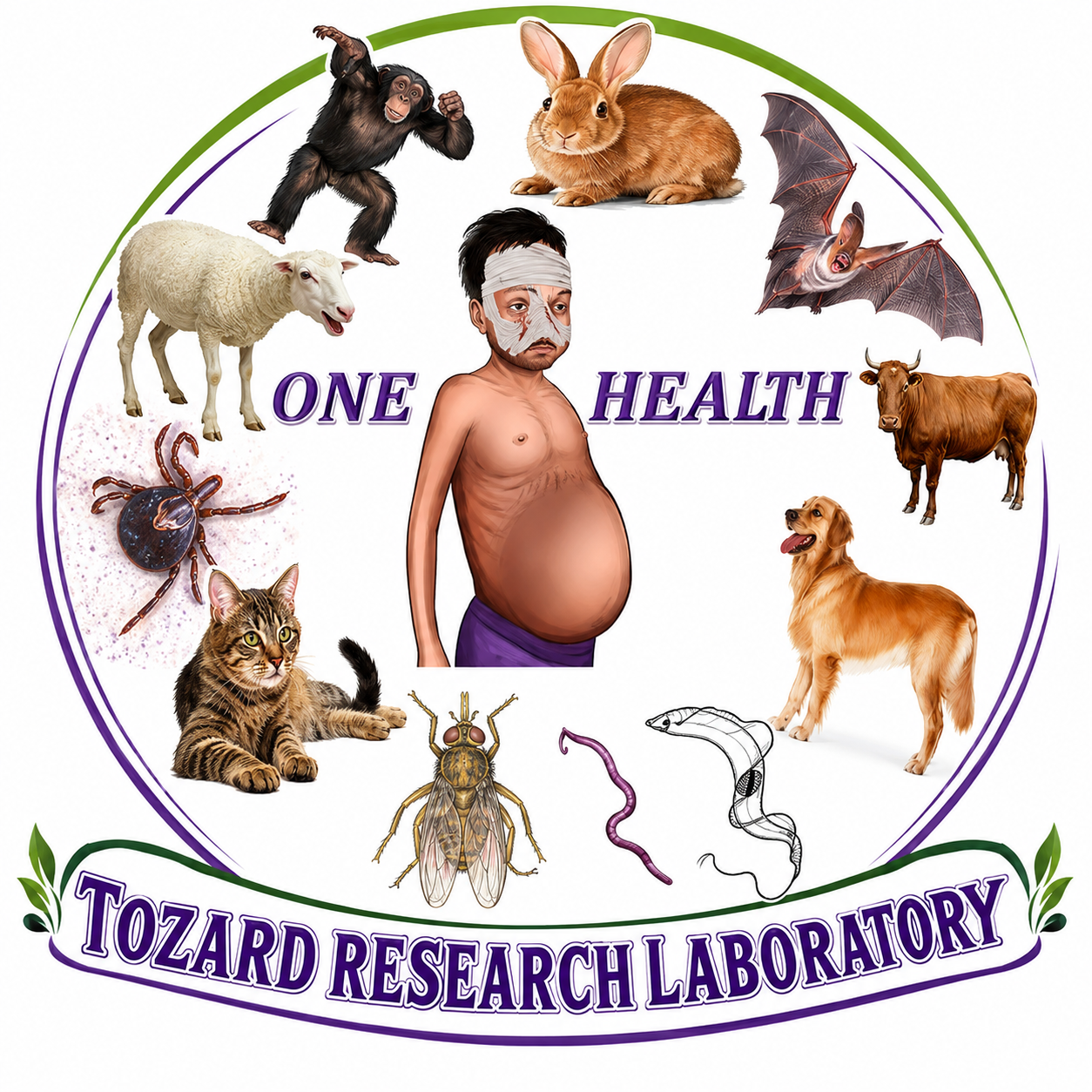
 Trypanosomosis Onchocerciasis Zoonosis Association for Research & Development
One Health research across parasites, vectors, hosts and environments.
Emphasis on Trypanosomosis, Onchocerciasis and Zoonoses, with research spanning epidemiology, parasite-host-vector-environment interactions, molecular Biology, disease surveillance and innovative control strategies.
Trypanosomosis
Research includes tsetse and Tabanids, Molecular identification of trypanosome species through amplification of ITS1 region. Detection of specific antibodies against Trans-sialidases of trypanosoma congolense. Genetic diversity and species of trypanosomes circulating in the study sites.
Onchocerciasis
Work includes the bovine Onchocerca ochengi model, host-parasite interactions, vaccination, zooprophylaxis, chemotherapy-related studies, and transmission research.
Zoonoses
The programme includes molecular epidemiology of zoonotic diseases and research on interactions among parasites, hosts, vectors, environments and ecosystems.
Vector-borne diseases
Documented expertise covers ticks, tsetse, mosquitoes, vector bionomics, insecticide resistance and molecular biology.
Molecular epidemiology
Research activities include PCR-based detection, molecular identification, pathogen and endosymbiont studies, and genetic markers.
One Health
The laboratory seeks to connect biomedical research with community engagement and related disciplines, including social sciences to improve disease-control applications.

From field sampling to laboratory evidence and community application.
- Investigate disease and vector patterns in field settings.
- Collect samples and conduct laboratory analyses.
- Generate and interpret empirical evidence.
- Combine findings with relevant existing scientific literature.
- Transfer useful knowledge through community outreach, workshops and demonstrations.